Horse Property Checklist For Eastern Colorado Buyers
November 21, 2025
November 21, 2025
Shopping for a horse property on the Eastern Plains can feel exciting and overwhelming at the same time. You want safe fencing, reliable water, and room to ride, but you also need to think about wells, zoning, and winter access. If you get clear on the local must-haves before you tour, you can compare properties with confidence and avoid costly surprises. This checklist walks you through what to look for in Byers and the Bennett corridor of Arapahoe County so you can spot strengths and red flags fast. Let’s dive in.
The Byers and Bennett area sits on semi-arid plains with low precipitation, big temperature swings, and frequent wind. These conditions affect dust control, arena moisture, and pasture productivity. Soils range from sandy loam to clay, which influences drainage and footing choices. Windbreaks and shelters add real value on exposed sites.
Water is both a physical and legal topic in Colorado. Many rural parcels rely on wells for the house and stock. You will want the well log, permitted drilling depth, static water level, and a sense of sustainable yield in gallons per minute. If surface water or ditches are involved, ask about water rights and any augmentation plans. For potable use, request recent tests for nitrates and coliforms.
Confirm what you can do on the property before you fall in love. County zoning and any HOA or covenants may limit the number of animals, accessory structures, or commercial boarding. Some barns and arenas require permits. Also look for easements or shared driveways that affect trailer access and emergency egress.
Finally, think about logistics. Gravel county roads are common. Check winter access, driveway surfacing, and snow removal needs. Proximity to feed, hay, farriers, and equine vets varies by parcel. Bennett typically offers quicker access to metro services than more easterly locations, but each address is different.
A good arena starts with drainage. On clay-prone sites, look for a gentle crown or a slope to one side with firm base drainage. Walk the perimeter for signs of standing water after storms and weeds creeping into the edges.
Footing should match your goals and maintenance plan. Many private facilities use sand or sand blended with fibers or engineered mixes. Ask when the surface was last reconditioned and how it is maintained, including dragging and watering.
Inspect base depth, material consistency, and drainage outlets. Ask for maintenance logs if available.
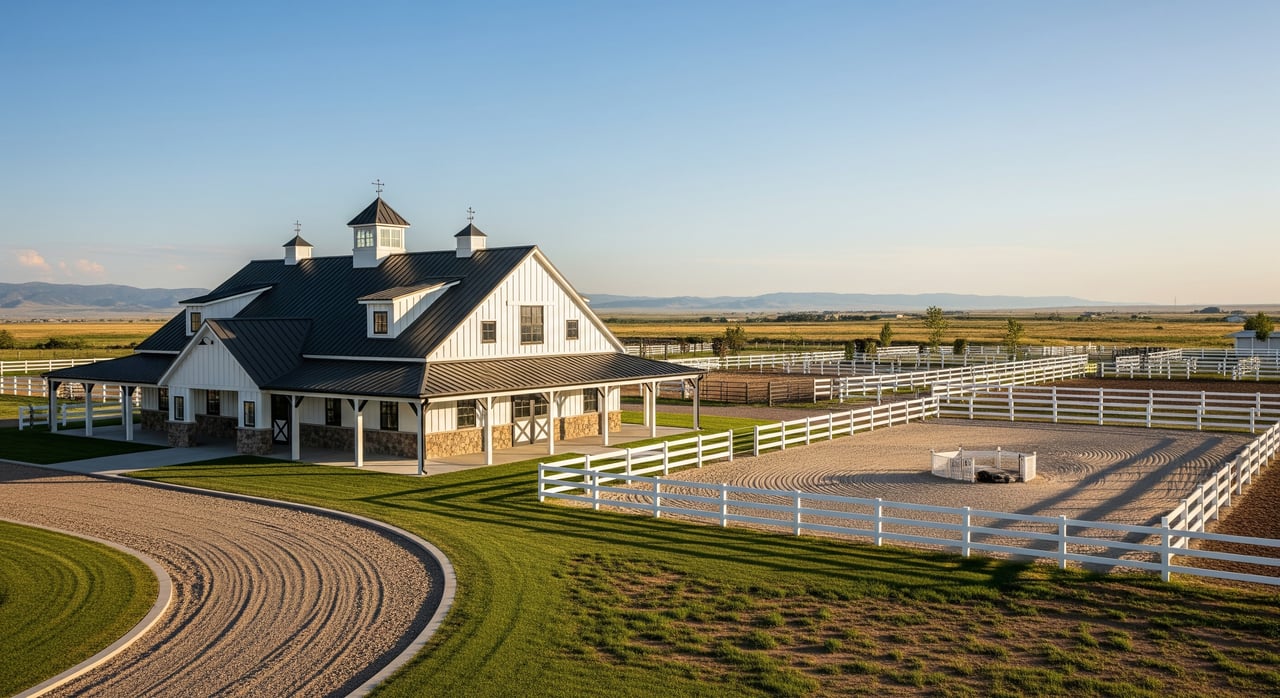
Safe, functional barns share a few traits. Stall sizes of 10' x 10' are common minimums, while 12' x 12' works better for many adult horses and broodmares. Check partitions, hardware, and flooring for condition and safety.
Aisles should be wide enough for handling and equipment, often 10 to 12 feet. Confirm door and aisle clearance to move hay and machinery. Ventilation matters. Ridge vents, cupolas, and windows help reduce ammonia and moisture.
Look for a secure tack and feed room with ventilation and rodent control. A defined wash area with drainage and a nearby manure staging spot makes daily care easier.
Inspect the roof, siding, and any insulation. Ask about the electrical system, including 120 or 240 service, GFCI outlets near water, and any heating units. Request building permits for the barn and major outbuildings where required.
Horse-safe fencing is nonnegotiable. Perimeter fences generally run 4.5 to 5 feet tall. Safer materials include wood rail, vinyl rail, high-tensile with visibility, or smooth wire with visibility tape. Avoid barbed wire for horse areas.
Cross-fencing helps with rotational grazing and separating animals. Review durability, gate placement, and latch security. Trailer-friendly gates and drive entrances should be 12 to 14 feet wide or more for larger rigs.
Walk the lines for broken posts, sagging sections, and rust. Check corner braces and any electric runs and confirm the charger is functioning. Note any easements crossing fenced areas.
Pasture productivity on the Eastern Plains depends on rainfall, soil, and irrigation. Many buyers use a hybrid approach with pasture turnout plus hay. As a general guideline, pasture-based systems often need multiple acres per horse in this region. Exact capacity depends on your specific forage and irrigation.
Healthy fields show desirable grasses with minimal bare patches. Watch for poisonous or noxious weeds and ask about the property’s weed management history. If irrigation is present, inspect lateral lines, heads, and maintenance.
For stocking rates, rotational grazing, and renovation plans, consult local experts. Soil tests help guide fertilizer and seeding decisions.
Confirm on-site sources and capacity. Review the well log, permit, and any pumping or yield tests. If there are stock tanks, check size, plumbing, overflow, and drainage.
Winter freeze protection is a must. Frost-proof hydrants, insulated lines, and automatic tank heaters can prevent midwinter emergencies. Redundant water points lower stress if a pump or line fails.
Ask for recent water quality tests and any maintenance records. If surface water or ditch rights are involved, clarify the legal status and any restrictions.
Good access saves time and reduces wear on equipment. Look for an all-weather driveway with a comfortable turning radius for your trailer. Gravel that is compacted or paved aprons at the barn control mud and erosion.
Gates should line up with paddocks and load-out areas. Verify overhead clearance for trees and wires. Check slope and drainage for safe winter maneuvering. Confirm any driveway easements in writing.
Plan for storage and removal before you move in. A dedicated compost or stockpile area away from water sources helps prevent runoff. Look for access for trucks and a stable, graded base.
Ask how often manure is removed and whether there is a current hauler. If you plan to board or increase headcount, check county and state rules. For runoff control and windbreak plantings, technical help and cost-share may be available through conservation programs.
Bring this list to showings and under contract:
Specialists can save you money and headaches. Consider:
Targeted questions reveal how a place truly functions day to day:
Hay prices and availability vary season to season. Verify local supply options and distance to suppliers, and match your storage capacity to winter needs. Factor in feed delivery access and fire-safe storage.
Plan for recurring maintenance. Arena dragging and footing top-off, fence repairs, and barn upkeep add up. Long driveways can require significant snow removal.
Review insurance. Many horse owners need additional liability or farm coverage beyond a standard homeowner policy, especially if boarding or offering lessons. Distance to routine and emergency equine services is also a risk factor to consider.
Finally, look into conservation and improvement programs. Some agencies offer cost-share or technical support for fencing, water development, erosion control, and windbreaks that fit our plains environment.
Watch for these issues and get clarity before proceeding:
Use this at first showings to compare Byers and Bennett properties:
Map your essential providers as part of due diligence. List nearby hay sources, feed suppliers, equine veterinarians, farriers, haulers, and experienced contractors for barns and fencing. Keep contact details for county planning and zoning, water resources, and local extension for parcel-specific guidance.
If you want a practical, local plan for evaluating horse properties in Arapahoe County, you are not alone. Our area has unique water, wind, soil, and access considerations that reward a careful approach. A clear checklist and the right specialists can make your purchase smoother and safer for your horses.
When you are ready to tour or refine your criteria, reach out to the local team that handles acreage and equestrian details every day. Talk with the owner-led experts at Look East Realty to get a step-by-step plan for your search.
Discover unparalleled real estate service at Look East Realty. Our commitment to quality and confidentiality ensures your satisfaction. Trust our experienced team to meet all your needs.