Timing The Sale Of Your Large-Lot Centennial Home
June 11, 2026
June 11, 2026
Wondering when to put your large-lot Centennial home on the market? Timing matters, but so does preparation. If your property has extra yard space, RV parking, a detached garage, or flexible outbuildings, the best sale strategy is usually about more than picking a date. This guide will help you understand when to list, what buyers are looking for, and how to position your property clearly and confidently. Let’s dive in.
Centennial remained a seller’s market in spring 2026, but that does not mean every home could be priced casually. Realtor.com reported a 100% sale-to-list ratio and 29 median days on market in March 2026. Redfin also found Centennial homes averaged about three offers and sold in roughly 17 days over the three months ending in April 2026.
That sounds strong, and it is. Still, broader Arapahoe County data adds an important reality check. Zillow reported a 0.995 median sale-to-list ratio in March 2026, with 25.1% of sales above list and 51.2% below list, which shows why pricing from solid comparable sales still matters.
The strongest signal from market timing studies points to spring. Realtor.com’s 2026 report identified April 12 through 18 as the best national listing window, while Zillow’s 2025 analysis found the highest seller premium in the last two weeks of May. ATTOM’s 2026 study also found seller premiums peaking in March, April, and May.
For the Denver metro area, Zillow’s 2026 analysis placed the best listing window in the first two weeks of May, with an estimated 2.2% premium on a typical Denver home. For a large-lot Centennial property, that nearby benchmark matters because outdoor features tend to show best when grass is greener, trees have filled in, and patios, fences, and yard space look ready to use.
If you own a property with a bigger yard, extra parking, or detached structures, your lot is part of the value story. Buyers often need to see how that outdoor space functions, not just how large it is on paper. A market-ready launch in early May can help your home show that value more clearly in photos, showings, and online searches.
That does not mean every seller should wait until May. If your property is already cleaned up, well staged, and easy to explain, listing earlier in spring can still put you in a strong position. The key is being ready on day one rather than rushing to meet a calendar target.
Buyer interest has shifted toward usable space. Zillow’s 2025 search data showed rising interest in terms like pool, patio, yard, and view, along with growing searches for ADU, guest house, casita, in-law suite, fireplace, garden, and fenced yard. In the Mountain West, buyers also kept searching for ranch, horses, river, and acreage.
For Centennial sellers, that means buyers may respond more strongly to how your lot lives than to acreage alone. A large yard that supports outdoor dining, gardening, storage, parking, or hobby use can feel more valuable than raw open space that is hard to maintain or hard to understand.
NAR’s 2025 Profile of Home Buyers and Sellers adds another layer. First-time buyers made up just 21% of the market, while 54% of repeat buyers used proceeds from a previous home to help buy their next one. For a larger and often more expensive Centennial property, that suggests many likely buyers are move-up households looking for flexibility, function, and room to grow.
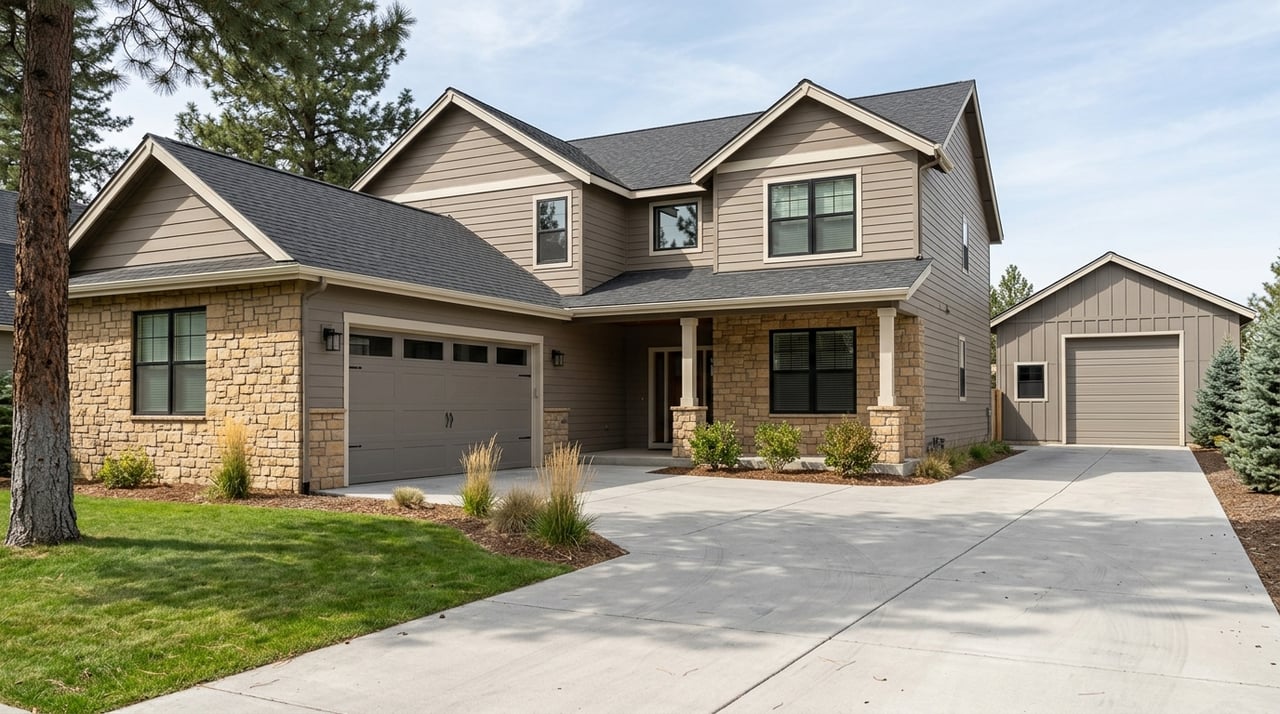
A common mistake with large-lot homes is focusing too much on interior square footage and not enough on the site itself. If your property has a long driveway, wide gate access, room for recreational vehicles, a workshop, a detached garage, or a finished outdoor living area, those features should be part of the marketing plan.
Zillow reports that listings with a complete digital media package, including high-resolution photos, 3D Home tours, and interactive floor plans, sell for about 2% more than similar homes. For this kind of property, the most important visuals may include:
The goal is to help buyers understand how the property works before they ever step inside.
Large-lot homes need thoughtful pricing. It is not enough to compare your home only by interior square footage if the lot has features that affect usability, maintenance, or legal value. A detached garage, legal accessory structure, or well-designed yard may support value differently than excess land with no clear function.
That is especially important in a market where many homes still sell below list. Even in a seller’s market, overpricing can slow momentum and increase time on market. The best pricing strategy usually looks at comparable homes with similar lot utility, improvements, and overall presentation.
If your property includes RV or trailer parking, make sure it is both legal and presentable. Centennial’s code-compliance guidance says an RV may be parked on private property if it has current registration or tags and is operational. The city also restricts RVs and trailers on public rights-of-way in residential districts, so sellers should not assume street storage is an acceptable fallback.
This matters because RV parking can be a plus when it looks intentional and well managed. It can become a negative if it feels like overflow storage, creates visual clutter, or raises questions during showings. Before listing, clean the area thoroughly and be ready to explain how the space is used.
Detached garages, sheds, workshops, and other outbuildings can add appeal, but only when they are described accurately. Centennial’s building division says permits are required for constructing, enlarging, altering, repairing, moving, demolishing, or changing the occupancy of a building or structure. The city estimates permit review times at about 5 to 20 business days.
The land development code also places accessory buildings under setback rules. In some residential situations, detached garages may be allowed in rear yards with 5-foot side, street-side, and rear setbacks, while some districts allow taller accessory buildings if principal-structure setbacks are met. If your outbuilding has special features, it is smart to confirm what is documented and what can be marketed confidently.
If you have a finished apartment, a garage conversion, or space that looks like guest quarters, use careful language. Centennial says ADUs must be permanent habitable structures, only one ADU is allowed per single-family detached dwelling, and recreational vehicles or travel trailers cannot be used as ADUs.
That means buyers may place more value on legal living space than on informal bonus space. If a structure has unclear permit history or uncertain allowed use, it is better to market it conservatively. Clear, accurate descriptions help protect your sale and build trust with serious buyers.
Presentation and compliance often overlap. Centennial treats visible inoperable vehicles as a nuisance unless they are behind a solid screening fence or in a fully enclosed permanent structure. If your property has project cars, nonworking trailers, or scattered outdoor storage, handling that before photos and showings is worth the effort.
For large-lot homes, buyers notice the full property. A neat yard, organized storage area, and tidy outbuildings signal that the home has been cared for. That first impression can shape how buyers feel about value before they even review the details.
If you want to hit the spring market, start planning well ahead of the list date. Zillow says many sellers begin thinking about selling three to four months before they list, and that timeline makes sense in Centennial. Permit reviews can take weeks, exterior cleanup takes time, and large-lot homes often need more coordination than standard suburban listings.
A simple prep timeline might look like this:
For many large-lot Centennial homes, the strongest strategy is to be fully prepared for an early May listing window. That timing aligns with broader spring market strength, the Denver metro premium Zillow identified, and the reality that outdoor space tends to show better as the season turns. But timing alone will not do the heavy lifting.
The sellers who tend to stand out are the ones who combine smart timing with clean presentation, careful pricing, and clear documentation. If your lot has features that need explanation, such as RV parking, detached structures, or flexible-use space, preparation can make just as much difference as the week you list.
When you want a sale plan that respects the details of a larger property, working with a brokerage that understands acreage, outbuildings, and how to market usable land can make the process smoother. If you are thinking about selling in Centennial, Look East Realty can help you build a local strategy around timing, presentation, and pricing.
Discover unparalleled real estate service at Look East Realty. Our commitment to quality and confidentiality ensures your satisfaction. Trust our experienced team to meet all your needs.